Panama Frustrations

Every country in the world has it's good things and bad things. I sure am enjoying the good stuff here. Two weeks ago I was again discovering the beauty of Panama, this time in the mountain regions. We stayed in the best hotel in David, Chiriqui (David is the capital of the province of Chiriqui), went to flower and coffee festival in a nearby city Boquete (which is a very popular retirement destination for Americans) and bought many beautiful flowers (orchids etc) and some tasty coffee which grows there plentifully. But - there are some frustrations I'm having as well and why not share it with the world. First of all time. It's polite to be late here. Even 30 minutes late is okay. One time at a business meeting a guy was 2 hours(!) late. He mumbled something about the traffic and everybody was fine with that. I can't imagine being late for something 2 hours in Europe. I am personally very punctual, so it is especially hard for me.

A useful characteristic to have in Panama is patience. Things can take a long, long, looooooong time. And they think that's fine. I though Dubai had prepared me well to take it easy and go with the flow. Wrong! Still a way to go...

Promises. When somebody promises something by some time, it doesn't mean much. If somebody tells you "I have this thing ready for you, come pick it up", my first thought would be "aah, it's ready, I can go pick it up NOW". Here it doesn't mean anything like that. It means the guy has the intention of getting it ready. And it's not just me who doesn't understand this stuff, Panamanians get fooled too, and they're not happy about it. So if they're not happy about it either, why not start being punctual and keeping promises? Of course, there are exceptions and it doesn't apply to everybody.

The way things are organized. Panama is full of bureaucracy, stupid rules that don't make any sense but people follow them to the point. For instance in the government side: I recently renewed my visa and had to experience a very ineffective system. You stand in (a huge) line, go to counter A, get forms, fill them in, stand in line, make copies of the form, go back to the line to counter A, give them the filled form - but they don't look at the form, but interview you instead asking the questions on the form (which you have now 2 copies of). You pass the test, are given an invoice, go stand in the line for counter B, pay some money, go stand in line C and make copies, go back to the line to counter A. And I missed some steps. All of this took 3 hours. Could have taken 10 minutes, if only 1 person would have done all of that stuff.

Another place to see idiotism in action in any mall. First of all you cannot enter most of the shops while carrying any bags. You have to stand in line to put your bag away to a place where they keep bags (don't know how to call it) before they'll let you in. Everything you buy, you get a receipt for and when leaving the store you have to show everything to the security guard along with the receipt and then the guard takes out a marker does a check on the receipt. Why oh why? Just today we bought a small table. I mean we told a guy in the shop we want this table. He went to the backroom, got one in a package (not assembled yet). He cut the package open, took out all the parts and put the package together again. Additional 20 minutes gone. I understand that the goal is to make sure all the pieces are there, but if the package is closed since the factory, what are the odds its not okay? The he filled out 3 forms and we needed to sign 3 different documents. All for a small cheap ass table. On your way out of course the security guard hassles you and makes a big deal out you not finding your receipt immediately.

And naturally every item you buy is put into a separate plastic bag. So every time you shop you will leave with 35554 new bags. Yay for the environment. They will also tie the handles into a knot or staple the bag and the handle together so its really inconvenient to carry it around.

It is also very okay in restaurants to be waiting for your food for 1 hour, getting something you didn't order and then they just say 'aah, oops'. No apology, no money back, no free meal. Customer service is notoriously bad in the country. And another things really bad is the selection of goods availabale at the stores. Things for kitchen, livingroom, whatever are all very much overpriced and very low quality. Panamanians have a taste for low quality crap. It seems to me that all the crap from all over the world is sent here and is sold off for a high price. It's like this exporter's dream. The wine selection is great, but at least half of it is undrinkable throat-burning liquid. Panamanians drink it happily and make sophisticated faces and gestures while drinking it. In a fancy restaurant a waiter offer you to sample a $2 wine like it's the greatest stuff ever.

Shops are full of fake stuff. You can buy fake books (plastic or tin things that just look like books that you can put on your shelf to look smart), fake-wood vases and whatever. People decorate the front yards of their houses with fake stones (made from plastic, just looks like stone). A neighbour of ours, an amazing jewelry maker told us that any middle class American has better art at home than rich Panamanians). He has seen people throwing away vintage very expensive French kitchen set just because it was old. And you can buy some expensive fake plates and cups instead.

And - this country badly needs an emissions standard. Any car that can move, can drive around. Every 5th car on the street has so much black smoke coming out of them that it blocks the sunlight. I am surprised how half of the cars on the street even move. The public transportation buses (US school buses from the early 17th century, or at least they look that way) make so horrible sound that it's like the end of the world is coming. They are called 'red devils' by the locals cause not only are the big, ugly and noisy, but also very dangerous in the traffic as they are huge and drivers visibility is limited.

And the general loud noise everywhere bothers me. The too loud music, the non-stop honking in the traffic and people yelling real loud.

The funny thing is that once I will leave Panama one day, I will miss all of these things.

Snapshots from Panama

Panama is a paradise. It has everything: the prettiest beaches you can imagine, pristine rain forests, mountains and hills, rivers and lakes, even 2 oceans. Everything grows here really fast. The temperature is near perfect (can get too hot and humid in some months). Sometimes when working indoors its easy to forget what a paradise I live in. But I do am grateful for being here.

Some snapshots from my life in Panama:

  • Taxis.
    Taxi system is very different here from what I've seen anywhere else. Firstly I have to say that taxis a very cheap (government subsidied) and everybody uses them all the time. It's like the most popular public transportation system. The city has been divided into different zones (like 3 or 4 zones for the whole city) and driving around in 1 zone costs only $1.25 for 1 person, no matter how far you want to go or how much time it will take. 95% of the time we pay that much here. When you cross to another zone, you've got to pay a bit more, but still ridiculously low amount. It's quite common for us here to tip taxi drivers as sometimes we feel it would be too low otherwise. Every additional person in the taxi cost 25 more cents. So if I'd drive alone it'd cost $1.25, then for 2 people its $1.50. When you take the taxi from point A and drive to point B to pick up a friend of yours to drive together to point C, your friend has to pay the full amount for himself. So kind of picking up friends with taxis doesn't work here. Another thing is that you cannot get the taxi just for yourself. Taxis will pick up people until they're full, as long as all the people are going to the same direction. I think that's pretty cool, gas-efficient way.

    There are taxis everywhere and getting one on the street is fairly easy. When you hail a taxi to stop first you have to tell the driver where you want to go and then he will decide whether he would like to drive there or not: based on the distance and traffic. It is very common for drivers to refuse to take you.

  • Loud music
    Panamanians love their music. Mostly it's salsa. And they love it loud. Nearly every car, no matter how old, has a fancy stereo system with good speakers - and they use it. Every weekend it's loud music all day long. Our neighbours set the volume so loud that the whole neighbourhood can hear it - too well. In my culture it's when you call the cops. Here they're almost like being generous by turning the volume up as everybody loves loud music.
  • Boom
    Panama is booming like crazy. In many ways it reminds me of Dubai with its love for tall glass buildings. And they're building their record-building towers here too. The tallest residential tower in the world is under construction here. I've even heard rumors of plans for building fake islands like Dubai. I hope that's not true. In business you learn that you need to be in the right place at the right time. Panama is the right place at the right time for so many ventures. Business opportunities everywhere, a shortage of talent everywhere. Bilingual (spanish+english) people can get jobs really easy. The only thing is that they can't or don't want to pay for that talent yet. Average salaries are still pretty low. Minimum salary is ~$350 on the paper, but a very large amount of people (e.g. fishermen) are not formally employed anywhere. Anyways, you can see the Panama boom just about anywhere you go. Panamanians are proud of that: I've heard in many conversations how they're one of the best and most developed countries in the region.
  • Cheap fruits and vegetables
    As I mentioned everything grows really well here. We took the tip of a pineapple, stuck it in the dirt and in 1 month it developed a really good root system. We go to the fruit and vegetable market once a week and buy huge quantities of produce. Really good, fresh and cheap. Bananas are almost for free. You can get a bag of 100 oranges for 3 dollars. Eating healthy and drinking natural juices on daily basis here is a really good deal.
  • Panamanian pride
    Panamanians are proud people. They can't go back on their words. For instance if a taxi driver thinks you're a stupid tourist and asks more money for the trip, and you confront him that the real price is this and this and thats how much you're willing to pay, he will rather not drive you at all than to ask a lower amount. Another example: you try to enter a building, but it has a security guard that wants to see your ID. If you don't have one with you, he will not let you in: just because he asked you for it and that means letting you in anyway means he was wrong. At the same time you see a ton of people entering the building and they're IDs are not checked. It's actually not important. They just have to save face.
  • Humility
    At the same time Panamanians are very humble. It is considered rude to brag. You're not supposed to say what all great achievements you have, what a fancy camera or car you have and so on. We met this guy at a social event that is from one of the best families in Panama, rich as well and with an amazing family history - from the highest social group in Panama - and the way he introduced himself and what he said was all very humble and played down. Even rich and famous Panamanians are not arrogant snobs. Sometimes it's hard to understand when you cross the line between telling about yourself and bragging.
  • My neighbours
    We live in a very colorful neighbourhood and some distinctive characters stand out. In a house next to ours lives a girl called Monica. We don't know her, even wouldn't recognize here. But almost every day a friend of hers comes and stand in front of her house and yells from the top of her lungs "Monicaaaaaa! Monicaaaaaa!". Then we have a guy, a street vendor, that sells tamales (traditional local food consisting of steam-cooked corn meal dough with or without a filling). He has a voice of an opera singer. Everybody in my part of town know him. He walked around, carries a big basket on his shoulder and yells "Tamale! Tamale!". His voice is really good. He's gonna be famous one day. Then we have a crazy guy that gets a kick out of pretending to be a traffic officer. He stands on an intersection and directs the traffic. The area has a lot of tourist and a lot of people follow his orders.
  • Chinitos
    Panama has a relatively high number of Chinese immigrants (who have lived here already a few generations). Most of them are very entrepreneurial and run little shops. Actually nearly all of the little shops in Panama are run by the Chinese. Hence they've coined a term "chinito" which means "the chinese shop". The shops are very important in local neighborhoods and people visit them all the time. Still - instead of calling the people in the shop by their names - they call them "chino" (means Chinese). That's kind of weird to me. Sometimes I wonder whether it is racist or not and how do the Chinese feel about it. I personally shop at chinitos too, at least 1-2 times a week.
  • Spanish
    As I've pointed out here most of the Panamanians don't speak English. Even in restaurants meant for tourists they don't. Apparently the public school system is really poor at teaching English and people that want to learn languages need to go to private schools. Anyways that is good news for me - it really forces you to learn Spanish. My Spanish is progressing quite well - I can speak conversational language fairly well (a way to go to fluency of course) already, but need to work more to develop vocabulary and learn the grammar. I started a 2-month long Spanish course here just for that - it's hard to pick up grammar on the street, so a formal course is helping me with that.
  • Religion. Panama is a catholic country and I think people here are pretty religious. Every time I drive with somebody (e.g. taxi driver) past a church, they make the cross sign with their hand.
This weekend I'm going to the mountain area of Panama, so I'll post about my experiences there.

A month in the US

I am back in Panama. A month in the States went by so quickly. Something that I always wonder about is how going from one country to another is kind of like going to another dimension at the same time - especially if the countries are far apart, with quite different everyday realities.

Life in Panama is unique and the everyday rhythm is different here. So is the US, Estonia and Dubai. Whenever I am in one of those places I feel like the other countries are so far away, like a distant dream. It would have been easy to forget all about Panama had I stayed in the US for a longer time. Now being back here Panama seems so cool and real, and the US seems to be in another dimension, with its people and reality.

The highlights of my trip were spending time with the people there and observing the holidays over there. I've written about Thanksgiving and I want to say something about Christmas too.

I find it quite fascinating how Christmas traditions are different in different countries. In some countries its the Christmas Eve (24th) that is the most important day, for some the Christmas Day (25th). In the US Santa Claus comes while the children are sleeping through the chimney and leaves presents in the stocking or under the Christmas tree. In Czech Republic is the Baby Jesus (Jezisek) who delivers the presents:

"Small children are not allowed in the room where the Christmas tree is being decorated. So, the parents decorate the Christmas tree, prepare all the presents and light the candles. The children are told that during the evening when no one is watching, the little baby Jesus, Jezisek, comes and brings the presents and the children don't really have any real idea about what Jezisek looks like. Then the grown ups ring a bell, slip out of the room, the children enter and there it is- in the darkness the tree is all lit up and the Christmas presents are under the tree."


In Estonia the presents are delivered by Santa Claus himself - directly to the children. Santa Claus comes by during the evening of the Christmas Eve, walks in the door and has a big bag full of presents. Everybody, children and adults equally, have to recite a poem, sing or dance to redeem their presents from the Santa. Preparing for Santa's coming is an important part of December as children are memorizing poems and songs. Nobody gets a present without doing something first - you have to work for your present.
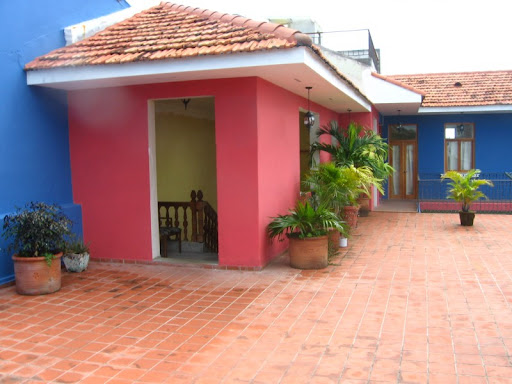
Here is a difference I saw between the US and Estonian Christmas: in the US you don't have to do anything to get presents, thus the appreciation for the presents is lower. If you don't immediately like what you got, you throw it aside and run to open the next one. In Estonia the children appreciate the presents more because you had to work for them. At the very least, you pay more attention to it and try to figure out what you got and how it works. I might be biased, but I feel the Estonian version is better in that sense.
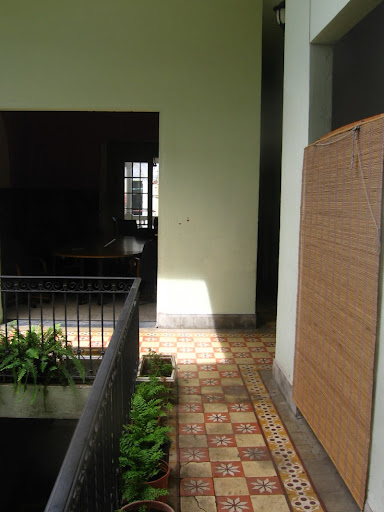
I see a parallel with money. You spend easily money that was given to you for nothing, and are frugal with hard-earned income.

Other than that Christmas was fun, warm and full of love and good food like I guess it is everywhere.

It was kind of hard to leave the US and the people there - it's always hard to leave I think - but it is so very nice to be back in sunny, happy and warm Panama.

Discover Your Purpose of Life

Do you know yet what is your purpose in life? Are you living your passion?

I think living a life of purpose is a spiritual experience.

I recently revamped the The One Question website that provides spirituality information and helps you discover your purpose in life.

Happy self-discovery!

Updates

I'm currently in Austin, Texas - a nice change for hot Panama. Here the weather remind me of autumn in Estonia. There golden leaves on the trees, and it's cold. Didn't think it can get as cold in Texas, but what do you know. Now it's gotten better, but on the weekend it was around 6 degrees.

I'm staying in Austin for almost a month, going back to Panama after Christmas. So I get to experience the Christmas here too. So far the weather is stopping me to feel like Christmas (where's the winter?), but maybe it's too early. At least it's not like Dubai where I spent Christmas during a perfect summer weather.

I participated in my first Thanksgiving last week with Sarah's family. I'm beginning to understand why its so important for Americans. It's the food of course! Just kidding. (Although it was reaaaally good).

It's a strange feeling being back in the US. I spent 3 months here in the springtime and now when coming back it's a familiar feeling. The culture and surroundings here feel closer to home than Panama.

Anyways. Probably I'll report again once back in Panama to share my plans for the next half a year along with some Panama stories.

Illegal Rainforest Deforestation by a real estate developer.

A real estate developer is destroying a highly disputed rare strip of rainforest in Panama City against government 6rders. We can stop them right now, we just need your voice. We need to tell the world what is happening, how unique rainforests are being destroyed in full view of public authorities who are are impotent to act.

Let's tell the world. Read about it here: http://www.crea-panama.org/deforestationnews.html

What you can do:
- blog about it
- submit http://www.crea-panama.org/deforestationnews.html to social bookmarking sites like digg.com, reddit.com and so on
- tell the members of press

The more we wait the more forest is being cut down. We can stop it now, we just need more voices on our side

I've been to Paradise

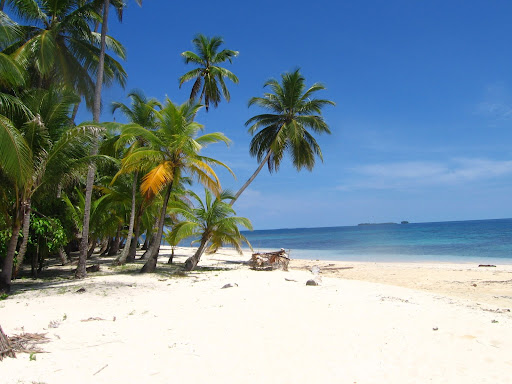
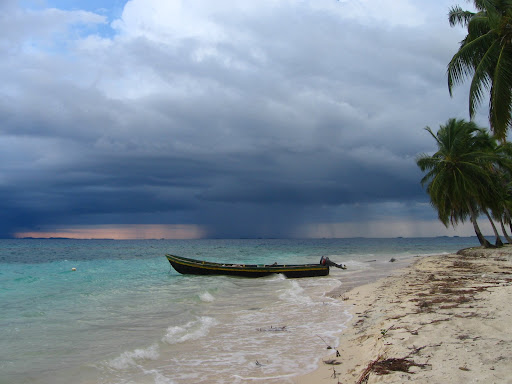
That's a picture I took 2 days ago. I have finally been to Paradise. It's the land of the Kuna people, indigenous tribe living on more than 350 islands off the coast of Panama.

As there was a long weekend here due to Independence Day celebrations, we had an offer to go to the Carribean side of Panama, to spend 3 days in the Kuna Yala territory. I am so glad we took it. I had heard of the beauty of the Carribean so many times before, but had not yet had the chance to see it for myself.

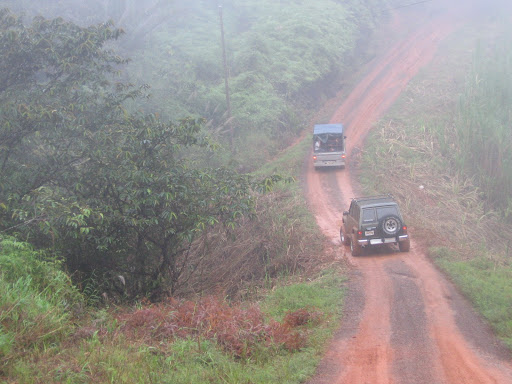
Kuna Yala (territory for Kuna people) is quite isolated - there are no proper roads to the area, no modern development. Internal flights from Panama City go there a few times per week, alternative is to take the dirt road across the mountains. We chose the latter one as that's cheaper.The road took us through rainforest and cloudy mountains. The road was so bad and muddy that sometimes I was astonished we didn't get stuck. Naturally we were driving 4x4 cars. Panama is gorgeous and it was a beautiful drive. Check out the video below that shows you the serenity of the rainforest:

At one point the road ended and the only way to continue the ride was to drive through a river - which we did. Never experienced that before. To my surprise it was easier than I thought, no water what so ever came inside the car. I recorded this as well:

Finally we arrived to a tip of a mountain were we saw the Carribean for the first time. Video:

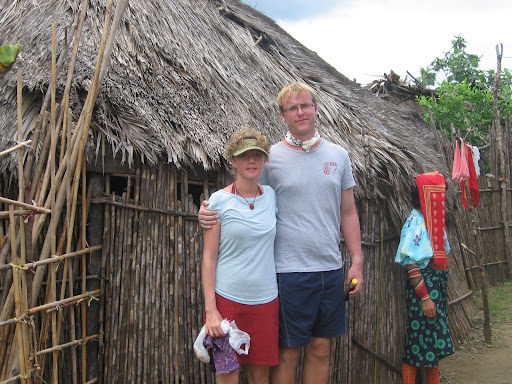
On the coast there was a boat waiting for us ready to take us to a Paradise island. We passed many little islands and made a short stop to change the boat in one. The whole boat ride was jaw-dropping for me as I all of the islands were amazingly beautiful.This was also my first hands-on contact with indigenous people in Panama. Observing their way of life was a one of a kind experience, one that I am very thankful for. Kunas have managed to maintain the way of life their ancestors were living with only a few modernizations, like motors for the boats, gas cookers and sowing machines. Some of them that were involved with tourism had cell phones. Thats about it. The houses were made out of straw. All the clothes hand-made. Fishing equipment made from whatever resources available on the islands.
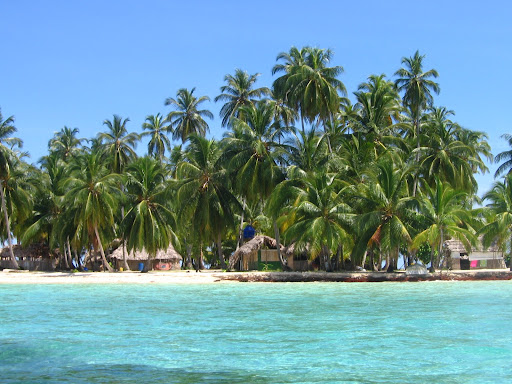
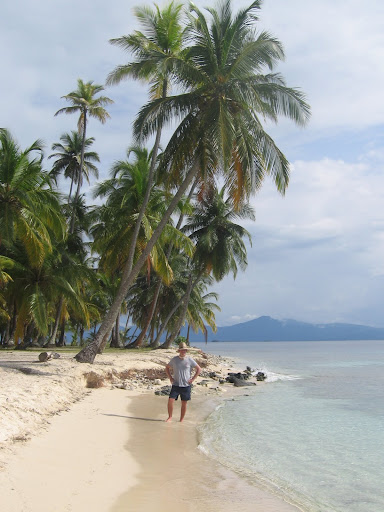
Some of the Kuna people make their living by allowing tourists to live on their islands. They have constructed cabanas (huts made out of straw and palm branches) for people to sleep in, offer food and boat trips for a small amount of money. The islands itself are a paradise. We were destined to spend 3 days on one of such islands. This was ours:
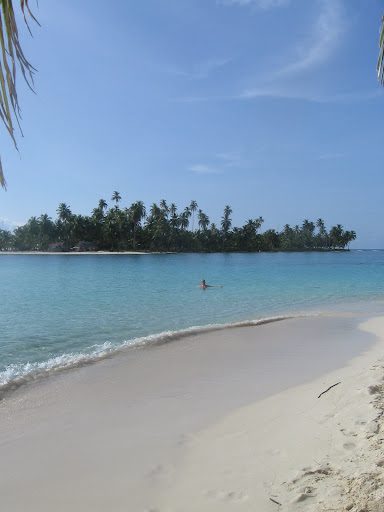
Yes, the water really comes in the prettiest colors: teal, light blue, green and white (because of the color of the sand in the bottom). We couldn't get enough of swimming. The water was totally transparent, perfect temperature and full of interesting "animals". Sometimes you could see a swarm of little fish (thousands!) swimming by, or some pre-historic fish-like things.That's me in the water. As you can see, the beach and water are really crowded. Kuna Yala (also known as San Blas) is a true undiscovered gem.

Besides our own island we also got to see a different island (Isla de Perros) which is supposedly one of the prettiest around here (and it really was beautiful). It had no dogs, but it did have a cat. As it was the Independence Day of Panama, we went to see how it's being celebrated in a bigger Kuna village. There was a little parade and some performances by the school kids (yes, they have schools on the islands). Check this out:


We learned quite a lot about the Kuna people and their traditions. It's fascinating. The women are more important in the society, and families generally want to have more girls than boys. When young couples get married, its the boy who leaves his family and becomes a part of the girls family. When a girl reaches a certain age, she will have a coming of age ceremony that lasts for 3 days. In the process all of her hair are cut off and she never lets them grow long (only up to shoulders). Kuna religion has 2 gods: a man and a woman who are the beginning of all (like in the nature).

Our tour guide called Robinson (a Kuna) was quite knowledgeable of worldly things - he knew exactly where Estonia is on the map and happily showed it to everybody.

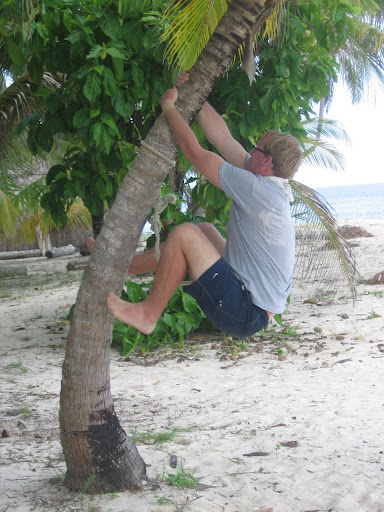
Among other things it was the first time I drank coconut water straight from a coco. I also tried to climb the coco palm and found its not as easy as seen on TV.I also discovered how beautiful can Paradise islands be during the sunset. The mix of colors is quite astounding.Anyways, when you come visit me in Panama, we can go there together too. So better start making your travel plans.
Check out all of my pictures from this trip: http://picasaweb.google.com/peep.laja/KunaYalaTerritory

Costa Rica and the way ahead

As the Panamanian tourist visa is valid only for 30 days, we had to leave the country and decided to go to Costa Rica. We traveled to Costa Rica bus and the trip lasted for too long - 17 hrs. The only good thing was that we could admire the amazing landscape and cloud forests of Costa Rica rural areas. During the trip the bus stopped several times as the road needed to be fixed - constant rainfall (and the downpour of water from the mountains) had destroyed the road in many places. We had great plans for spending a week at a wonderful beach sipping great cocktails, but unfortunately it didn't quite work out that way. October and November are the culmination for the rain season which meant that it rained every god damn day. Most of our time was spent in the hotel. The good thing was that internet was available and we could work from the hotel, so time wasn't wasted.

When we looked for opportunities to go outside San Jose (the capital), we were taken aback by the outrageous prices of public transportation. A bus to the Carribean coast was $80 one way (4 hour trip)! So for the 2 of us a trip there and back would have cost $320. This must be the most expensive bus in the world. In Europe I could fly from North Europe to the Mediterranean and back for that money. Only later we discovered that there is another cheap bus company going to all the locations as well, but it seemed to be a well-kept secret that no white man should find out.

Average Costarican (in San Jose) seemed to be somewhat richer than average Panamanian - although appearance might have been deceptive. Prices in San Jose were higher than in Panama City with few exceptions (restaurants). A taxi driver told us that many Costaricans go on shopping trips to Panama City as clothes and other that kind of items are so much more expensive in San Jose.

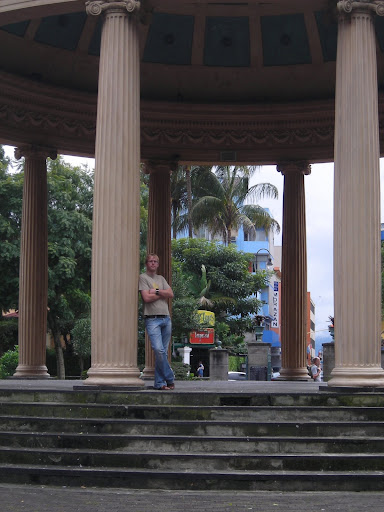
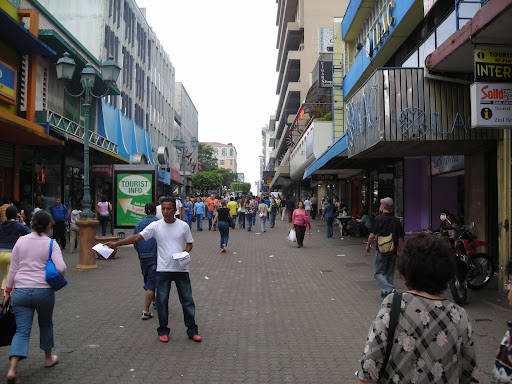
The city of San Jose was less impressive than Panama City, but seemed more safe. The city lacked the fancy old town that Panama has, although it had its old district with some pretty buildings too. The city itself was considerably smaller and easier to navigate. We saw so much more white people - Costa Rica as a tourist destination is way more popular. What I liked the most about San Jose that it had a proper city center with a walk-only street like most of European cities. Panama City doesn't have a city center (like Dubai) and I miss that.

Costa Rican Spanish was a lot clearer and easier to understand than Panamanian. We picked a difficult country to learn Spanish in :)

Now we've been back in Panama City for a week. Some updates of what's going on with my life:

The ethical company that I was doing some work for turned out to be not that ethical in its business practice. Sarah wrote about that in her blog, so I won't go into details here. As I couldn't rely on income from that company anymore, I decided to go solo. My initial research and talks with local people pointed out to me that there are wonderful business opportunities here in Panama. Right now, this is the place to be as all sorts of things are happening and now is the time to take advantage of this and build something great. I have many plans and I've started to execute them already. I started my own internet marketing company here and the future looks bright.

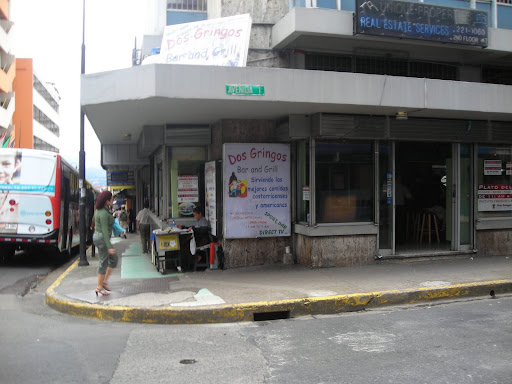
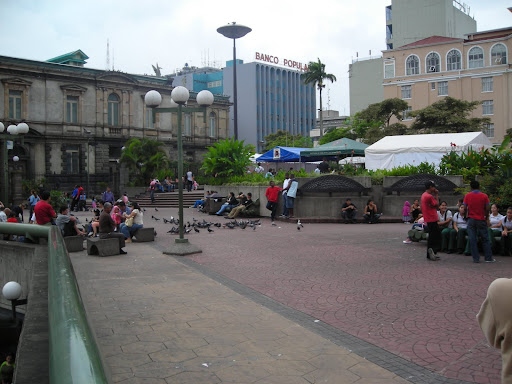
Some views of San Jose:


Village life in Panama

Sarah just spent a week in Ngobe Bugle, in a village called Soloy. Read about the amazing experience here.

1 month in Panama

A month has gone by fast (doesn't it always?). Nevertheless, so many experiences fit into this month. To be honest, I already feel quite settled in. I can orientate in the city, have some easy conversations in Spanish and I know what to expect. Panama is kind of easy to learn, I think. Naturally I still know only the tip of the iceberg, but I feel I know much more than I did after my first month in Dubai. Even the city is easier to learn.

What I have also noticed about myself is that I am not as excited and full of emotions about living in a new country as I was the first time (in UAE). Maybe it's because international lifestyle has become sort of a commonplace for me, maybe I've got older and wiser, maybe the local culture is not that different from mine as compared to the Middle East.
Don't get me wrong - I'm loving every minute of it and I do am excited about being here. Just the emotions were more powerful the first time. Maybe its one of those "first time" things... the first trip, the first kiss, the first roller coaster ride, the first.. whatever ...were kind of special and you had very powerful emotions that you still remember. I would be curios to hear comments from my international minded friends about that.

Panama is a cool place. Its lively, up and coming. Lots of opportunities are coming up. Real estate is booming like nothing else. That and the expansion of the canal are brining in lots of investment and creating jobs. I've identified some potentially profitable opportunities for myself as well, let's see how that goes. Job market is really hot. Bilingual people (Spanish+English) get jobs really easily. Getting job interviews is almost effortless. I've tried to find jobs in several countries in the course of my life, and no other country comes even close to Panama right now (or maybe Estonia would be the same at the moment, the job market is hot there too).

I like Panama City too. It has the old town (Casco Viejo, where I live) and the new town. The history and the future. It creates this dynamic, this tension between the old and new which is ... life.

Tonight I am leaving for a city called David, meet up with Sarah there and head towards Costa Rica. We'll stay there for a week at some paradise beach. See you later.

Pictures: some random city views

The Best Cat Site in the World

... is naturally Catpert: The Expert on Cats. Cat health and cat care, pictures of cats and and more.

Anyone who knows me enough knows that I love cats. A while ago I discovered that there were no good cat sites in the world. So I made one. Reminds me of that story how Jack London said he didn't think there were any good books around, so he decided to write some. So I'm like Jack London in a way. That's cool.

Anyways, I have big plans for Catpert. I'm gonna take over the cat industry. If you know of anyone who likes cats, send them the link. Thanks!

http://www.catpert.com

Casa Arias

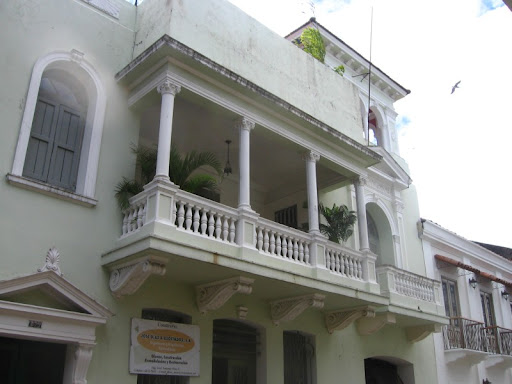
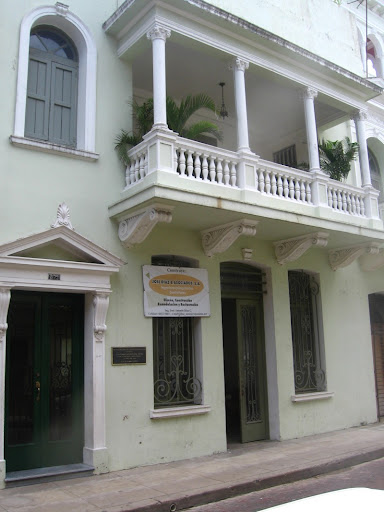
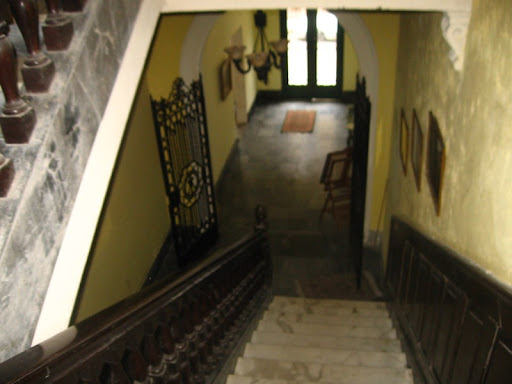
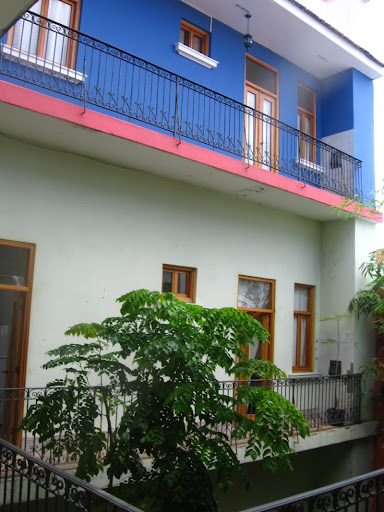
Our new home here in Panama City is called Casa Arias. It was built for one of the founders of the Republic of Panama (president 1903-1904), Tomas Arias. The house is grandiose, in a good condition and still has most of the original pieces. The stair case is made from marble imported from Italy, the banisters are handcarved mahogany. The house itself is big and old enough to make a good location for a horror movie. Every room has a very high ceiling, I would say 3.5 meters which creates a special atmosphere. You really feel like a king living in this house.

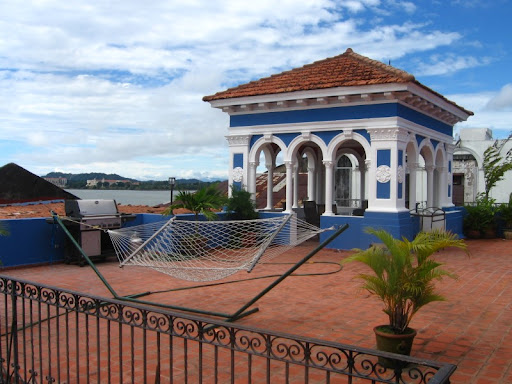
Since the building is so big, it is shared - but its not strangers together, but like a big family. It has a small company renting an office on the 3rd floor, office of the non-profit of our landlord (a youth leadership development organization called Earth Train) on the ground floor. We have a small apartment on the 2nd floor (bedroom with a balcony, bathroom, kitchen and a small room between the last 2). Owners' quarter are also on the 2nd floor. There are many common areas which we all share, like the pavilion on the 3rd floor (suitable for parties, BBQ, meetings, chilling out) and a small observatory on the 4th floor. There is also a security guard who lives here.

House is still under renovations in some parts and work on it is going on. There will be an art gallery on the ground floor. The courtyard and 3rd floor open area will be filled with tropical plants everywhere.

The house itself is maybe 40 meters from the sea. We have a gourmet grocery just next to our house and famous Independence Plaza with a beautiful cathedral is just 30 seconds walk away. I wrote about the magic of our neighborhood the last time.

I took some pictures today, but its hard to capture the house with pictures. Perhaps I need to walk around with a video camera if I want you to really see the place. Anyways, pictures with comments:

The fascade
Yep, thats our home. The main entrance is the big door on the left.
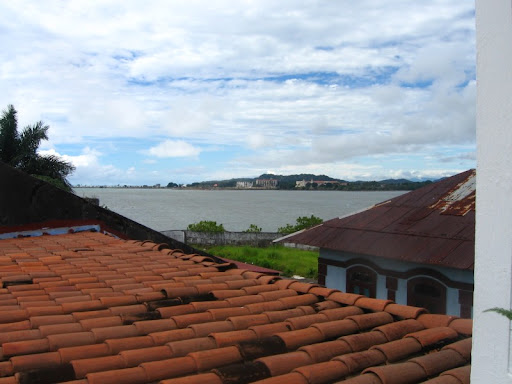
The view from the open area on the 3rd floor. Bridge of Americas on the right
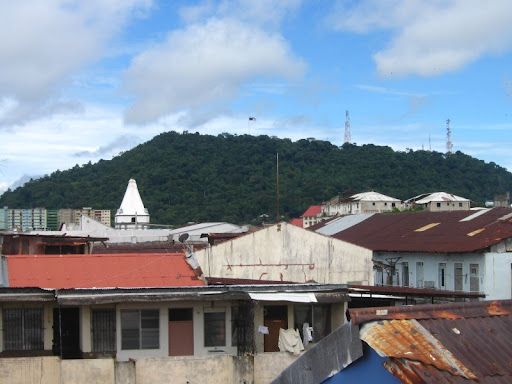
View from the observatory. The flag of Panama is on top of the hill
Marble stairs
The courtyard. This will be redesigned/re-landscaped and turned into a piece of tropical paradise
Going down towards the main entrance
Open air pavilion. As I mentioned, it is used for meetings, parties, drinking wine and so on. Notice the grill on the right and don't forget the hammock (haven't used either of them yet, but I will a lot).
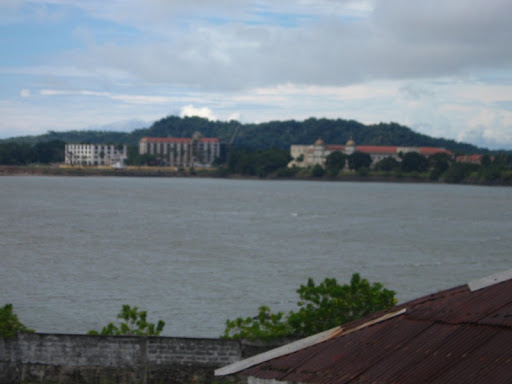
View to the causeway. That causeway leads up to 4 islands which are filled with restaurants. Popular sightseeing destinations.
View to the sea from the Pavilion
View from the Pavilion. Notice the ships queuing for the canal. The abandoned house you see will be turned into a boutique hotel. Casco Viejo has a lot of houses like this which are now being bought and renovated. If you happen to have cash lying around, this might be your best investment ever.
More view to the sea
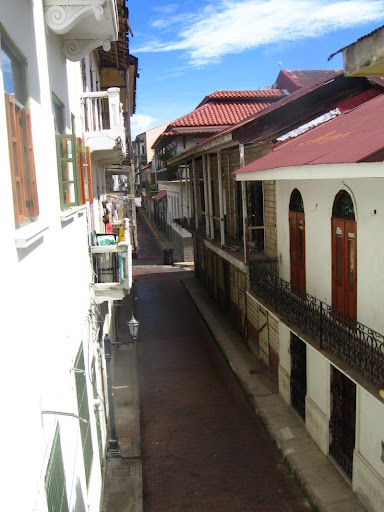
View to the street in front of our house. The house with the white balcony has the gourmet grocery where I shop once a day.
More neighbours.
3rd level open area. This will be filled with plants as well.
View towards the city center. The skyscrapers in downtown city are well visible. Nice contrast with the old tower.
A walkway on the 2nd level
Behind the blue wall is the small company I mentioned and the level below is our apartment
More views from the roof
Pavilion area
This is the house thats is turned into a hotel again
View from our balcony (other side of the house)
View from our balcony towards the street
Our kitchen. We haven't been able to fully furnish and decorate it yet. We love the wine rack.
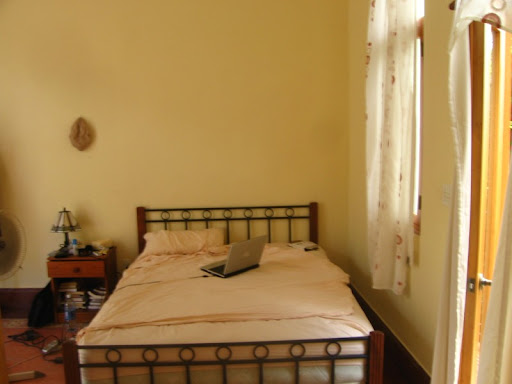
Our bedroom. The room is too big for the camera to capture it well, so here's one part of it.

Here are 2 videos I took. One has the view from the top floor of our house and the other one shows views from the French Plaza in Casco Viejo (close to our house).

Casco Viejo

On August 15, 1519, Panama City was formally established. It was built on the location of an Indian village on the shores of the Pacific. The city survived several disastrous fires, but finally was destroyed by pirates led by Sir Henry Morgan (know the 'Captain Morgan' rum?) in 1671.

Founded in 1673, Casco Viejo is the second Panama City, built after the famous pirate attacked and destroyed the first city center, Panama La Vieja, forcing its inhabitants to move to a new location 2 kilometers west-southeast of the original city.

Nowadays Casco Viejo is the most colorful part of Panama City. UNESCO declared it a World Heritage Site in 1997. It’s a city within the city, and one from a different age. Romantic, bohemian and cozy. Its also the main tourist destination in the city. Even the presidential palace is here.

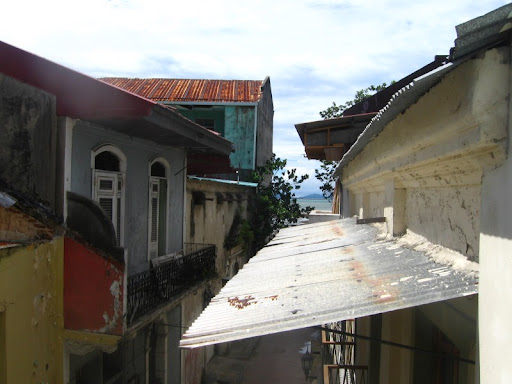
The architecture is a combination of ruins from the days of Spanish Explorers and Pirates, and French Colonial from the first attempt made on the Panama Canal by the French. To walk through Casco Viejo is definitely to walk through history. Buildings sitting side by side can be over three hundred years apart in age. Balconies are filled with flowers wrapped around sculpted wrought iron crafted in another century, The streets are brick, and no matter which way they run, they run to the sea, because Casco Viejo is surrounded by sea.

Casco Viejo is not your typical touristic old town. Its a place with its own vibe. You see newly renovated expensive boutique hotels next to houses about to fall down inhabited by squatters. The district is extremely diverse, a mix between rich and poor, beauty and decay.

Since the 1920s however, Casco Viejo has gradually become to all intents and purposes, a semi-elegant slum. The inner city syndrome gripped the area. Maintenance and development stagnated and it was basically forgotten, except by those tourists wishing to see some of the historical landmarks that are interspersed throughout. Squatters took control of the buildings as landlords left due to rental control disputes. This means there are very many houses until this day that are in a very poor condition and inhabited by very poor people - and many of them. Most have lived there for very many years and consider it as their home, even though their legal status is questionable.

As one walks the streets of today’s Casco Viejo, it becomes obvious that things are changing. One building is being renovated after another. The long-awaited revamp of Casco Viejo is happening. It already has the fanciest nightclubs, cool cafes and trendy sidewalk restaurants all over the place.

Why am I writing about this place? Because we're moving here. Yup, we're gonna live in the prettiest part of town in the middle of this rich history, beauty and diversity. Soon more about our house.

Pictures:

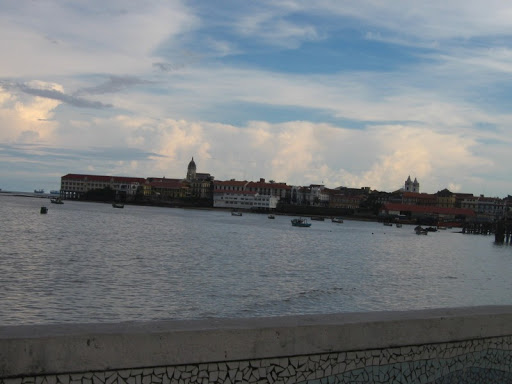
View to the Casco Viejo from afar
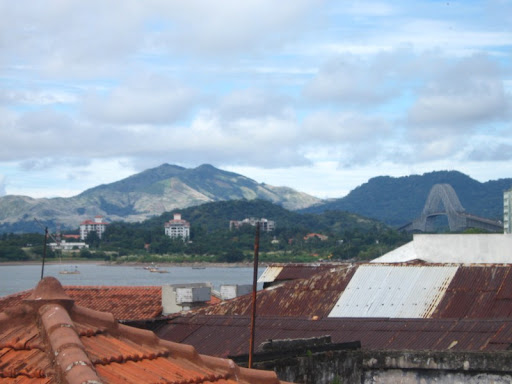
View from the Casco Viejo itself (yes, its on the coast). The bridge on the right is Bridge of Americas - the bridge connecting North and South America


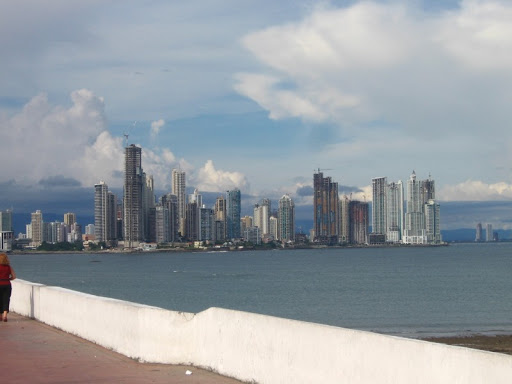
Downtown Panama City is also clearly visible from Casco Viejo

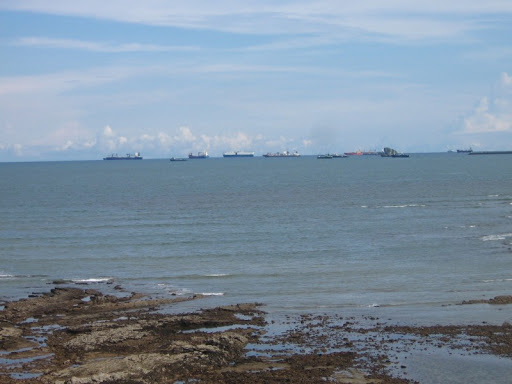
View to the canal from Casco Viejo. Ships queuing for the canal.